

Key Takeaways
- Medical malpractice claims stem from negligence by healthcare providers, focusing on harm to patients.
- Wrongful death suits involve fatalities resulting from another individual’s or entity’s negligence across various situations, not just medical care.
- Each claim type follows different statutes of limitations, legal requirements, and compensation structures.
Table of Contents
- Definitions
- Legal Procedures
- Statutes of Limitations
- Damages and Compensation
- Proving Negligence
- Case Examples
- Conclusion
When faced with tragedy due to negligence, understanding the difference between medical malpractice and wrongful death cases is essential. Both legal actions provide recourse for individuals and families affected by harm or loss, but they operate under distinct legal principles and processes. If you are navigating these complex claims or exploring how to pursue a wrongful death claim Tampa, FL, learning the unique aspects of each can help ensure you understand your rights and the next steps available to you.
Medical malpractice focuses specifically on negligence within healthcare settings, aiming to address injuries that result from healthcare professionals’ failure to meet established standards of care. Wrongful death claims, on the other hand, can arise from a broad range of fatal accidents or misconduct, encompassing much more than medical events. Understanding these core differences can be crucial when seeking justice and fair compensation for yourself or your loved ones.
Victims and their families often encounter uncertainty about which type of claim to pursue and what their legal journey might look like. Medical errors, vehicular accidents, and other incidents can turn lives upside down, but knowing when an incident qualifies as malpractice or wrongful death empowers your decision-making. In both circumstances, consulting with legal professionals and obtaining guidance early on will significantly impact your outcome and peace of mind.
Filing claims properly requires an understanding of state-specific regulations, what evidence is necessary, and which damages you can demand. Consulting authoritative instant sources, such as the Nolo guide to medical malpractice basics, helps clarify these procedural nuances. Below, you’ll find a comprehensive overview of both areas, allowing you to move forward with confidence.
Definitions
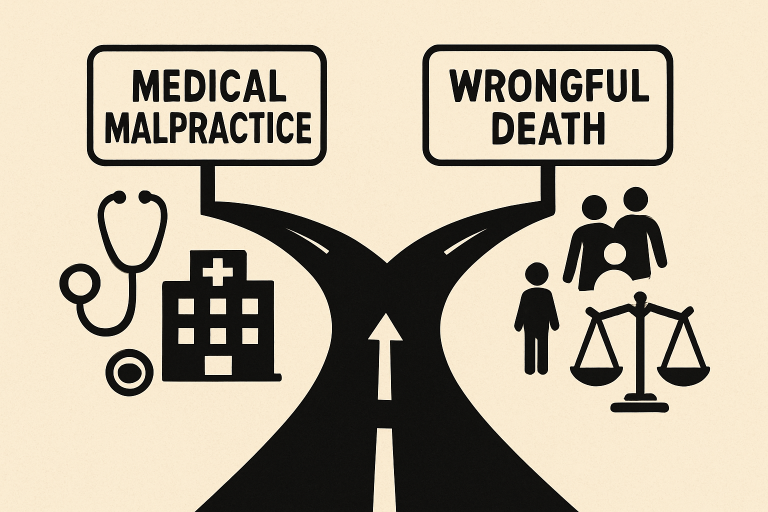
Medical Malpractice occurs when doctors, nurses, or other healthcare professionals fail to deliver the appropriate standard of care, causing injury, illness, or even death to a patient. Examples include surgical errors, delayed or improper diagnosis, birth injuries, or incorrect medication prescriptions. These claims center on breaches of professional medical standards and often require proof that another competent provider would have acted differently in a similar situation.
Wrongful Death describes a legal situation where a person’s death is caused by negligence, recklessness, or intentional misconduct by another party. This type of claim is not limited to the healthcare field and may involve car accidents, unsafe premises, defective products, or workplace incidents. The focus is on the loss suffered by surviving family members due to the untimely and preventable death of their loved one.
Legal Procedures
- Medical Malpractice: In these cases, the harmed patient (or their legal representative) files the claim against the healthcare professional or facility. The plaintiff must prove that a standard of care existed, the provider breached this duty, and the breach directly led to injury. Many states require an initial expert review or a certificate of merit before a case can be filed.
- Wrongful Death before aim is brought by the deceased’s family—usually a spouse, child, or parent—or by a court-appointed estate representative. While proving negligence remains crucial, the central focus shifts to the family’s emotional and financial losses caused by the person’s death.
In certain cases, a fatal medical error could be essential practice and a wrongful death claim, with the legal team determining the best course of action depending on the facts and applicable state laws. For more on how families can seek civil justice, see the New York Times overview of wrongful death lawsuits.
Statutes of Limitations
Every state sets its own deadlines for how long you have to file either type of claim. Missing those deadlines typically results in losing your chance to recover damages, so timely action is crucial.
- Medical Malpractice: The filing window commonly spans from one to three years from the date of the alleged injury or when it should reasonably have been discovered. Some states grant additional time if the harm was not immediately evident.
- Wrongful Death: These lawsuits typically must be filed within one to three years following the death itself; however, consult state-specific rules for exceptions related to minors or fraud.
Due to the strict and variable nature of statutes of limitations, consulting a lawyer soon after harm or death occurs will safeguard your right to pursue compensation.
Damages and Compensation
The types and amounts of compensation available differ between these claims. Understanding what can be recovered is an essential part of evaluating your legal options.
- Medical Malpractice: Plaintiffs may be entitled to damages covering additional medical costs, ongoing care, lost wages, loss of earning potential, and pain and suffering endured by the injured party prior to death or resolution.
- Wrongful Death: These claims provide compensation to surviving relatives for funeral expenses, loss of financial support, loss of companionship, and the emotional pain resulting from their loved one’s death.
Certain states cap non-economic damages for medical malpractice, so legal guidance is especially important to identify what options and amounts are realistic in your jurisdiction.
Proving Negligence
Whether a claim centers on malpractice or wrongful death, demonstrating that the defendant’s actions were negligent and directly responsible for the injury or fatality is fundamental to a successful case.
- Medical Malpractice: Plaintiffs must demonstrate, through expert testimony, that the healthcare provider failed to act as a reasonably competent practitioner would, and that this lapse directly resulted in harm.
- Wrongful Death: Plaintiffs must prove the defendant’s negligent or intentional actions were the primary cause of death, linking them to the incident in question. This can involve police reports, eyewitness statements, or forensic analysis.
Medical experts, accident reconstructionists, and other specialists are typically called to clarify complex details and establish causation clearly for the court.
Case Examples
Medical Malpractice Example
A patient undergoes routine surgery and, due to inattention, the surgeon leaves a foreign object inside their body. The mistake leads to infection and significant medical complications. The patient, or their representative, can file a malpractice claim based on an apparent deviation from the standard of care.
Wrongful Death Example
An individual is killed instantly when a distracted driver ignores a traffic signal and collides with their car. The deceased’s spouse or child initiates a wrongful death lawsuit, seeking damages related to emotional loss, lost income, and funeral expenses from the responsible driver.
Conclusion
Medical malpractice and wrongful death cases both serve the purpose of providing justice and compensation, but they target distinct harms and follow their own legal trajectories. Victims and their families should be diligent in promptly investigating claims and seeking experienced legal assistance to ensure their rights are fully protected. Understanding the essential differences is the first step toward making an informed choice and moving forward during a difficult time.